Tour Bus vs. Van vs. Fly Dates: Choosing Tour Transportation
Most tours move by one of three methods: a van (passengers and gear together, often with a trailer), a sleeper tour bus (bunks, a professional driver and overnight travel), or fly dates (flying to shows and using gear supplied locally). The right choice depends on the distances in your routing, how many people and how much gear you're moving, your budget and how much rest everyone needs. Plenty of tours mix all three.
There's no universal answer, and costs vary widely by country, season and vendor. Here's how to think through the trade-offs.
Touring in a van
The van is where most bands start, and for good reason: it's the cheapest way to move a small group and their gear.
What it looks like
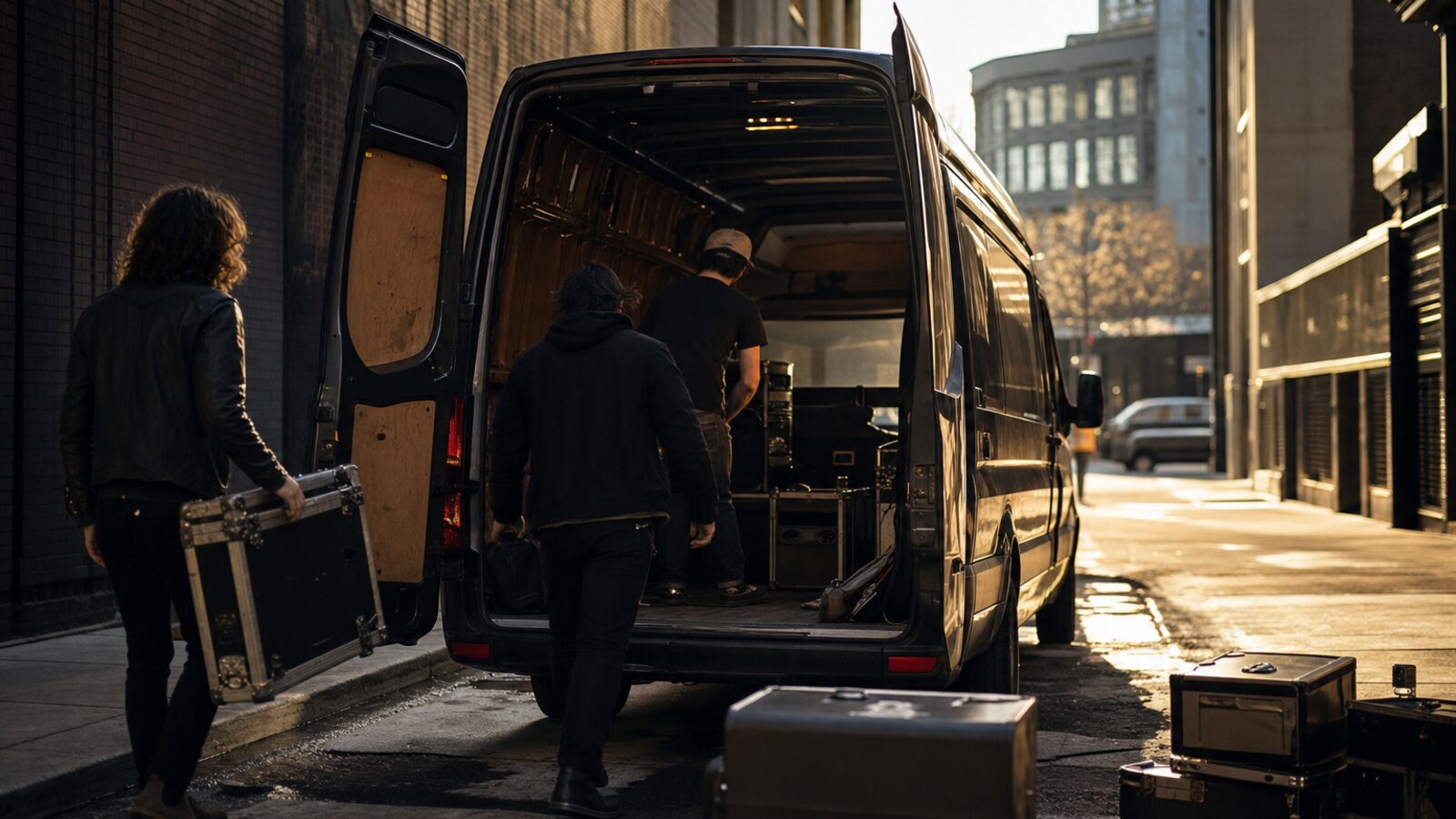
Typical setups include a 12- or 15-passenger van with a trailer, a high-roof van with seats and gear space, or, especially in the UK and Europe, a splitter van with seats up front and a separated cargo area behind. You might own the van, rent one, or hire a van with a driver.
Pros
- Lowest cost of the three options for most small tours.
- Total flexibility over schedule and stops.
- Room for backline, merch and a small amount of production.
Cons
- Someone has to drive. If that's the band or crew, it eats into rest and adds risk, especially after late load-outs.
- You need hotels or places to stay most nights, which adds cost and logistics.
- Long drives are tiring, and drive time after a show is when fatigue becomes dangerous.
- Security: gear left in a van or trailer overnight is a well-known theft risk.
Making van tours work
Keep drives short and realistic, avoid driving straight after a late load-out unless someone is genuinely rested, and rotate drivers. Check insurance carefully, both for the vehicle and for the gear inside it, because many policies have exclusions for unattended vehicles. If you're renting, confirm the company allows cross-border travel and trailers if you need them.
The sleeper tour bus
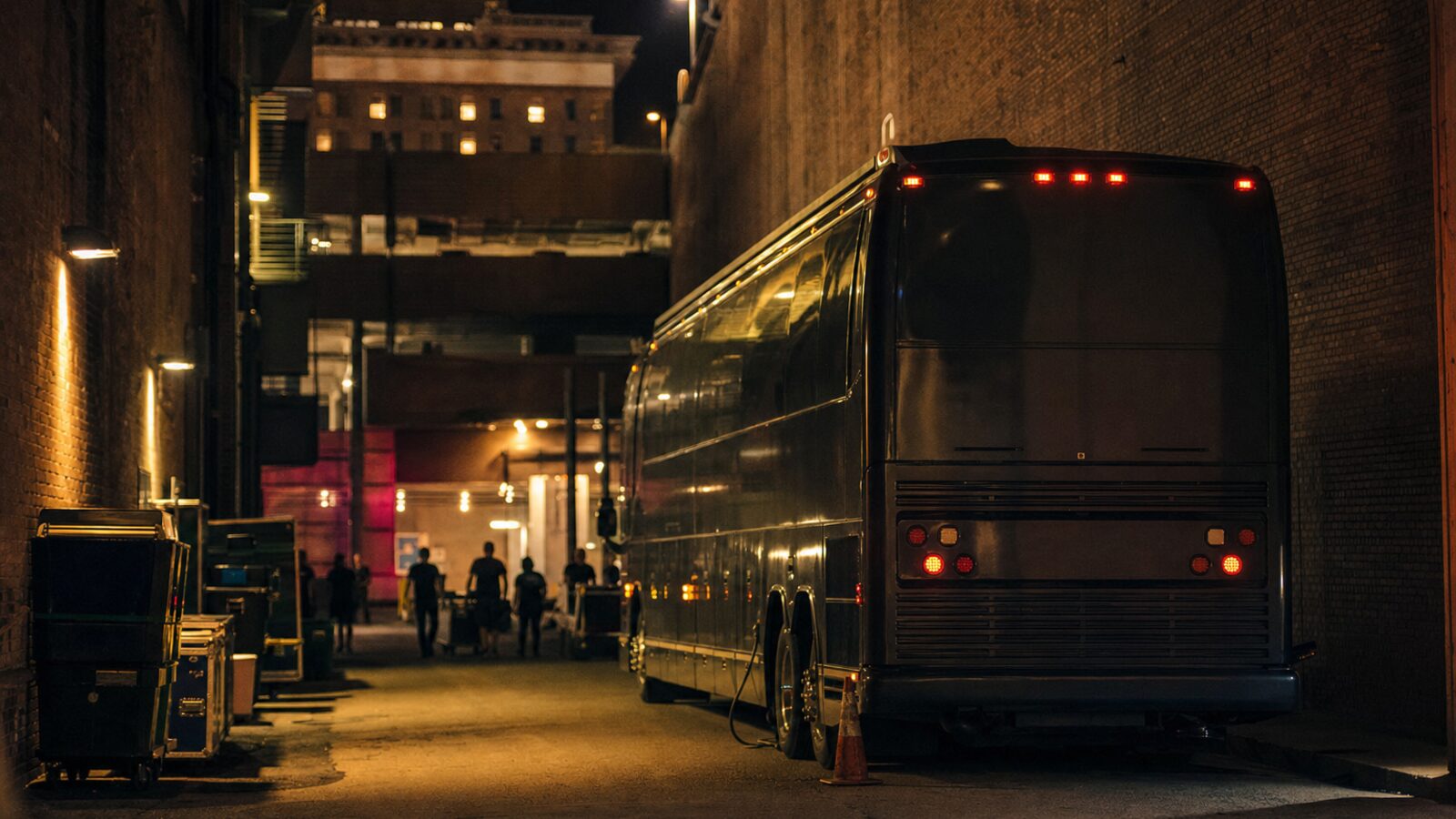
A sleeper bus (often just "the bus") is a coach converted for touring: bunks, a front and back lounge, a small kitchen area and, usually, a trailer for gear. It's normally hired with a professional driver.
How bus touring works
The usual rhythm is: show, load-out, everyone back on the bus, and the bus drives overnight to the next city while the touring party sleeps. You wake up at the next venue. The bus becomes the dressing room, the office and home for the run.
A few terms you'll hear:
- Bus call: the time everyone must be on the bus before it leaves.
- Day room: a hotel room booked for daytime use so people can shower and rest on a show day.
- Drive day: a day with no show, only travel.
- Driver hotel: the room booked for the driver to sleep during the day, since they drove all night.
Pros
- Sleep while you travel, which is a huge difference in quality of life on long runs.
- Fewer hotel nights. You'll typically still book day rooms, the driver's hotel and some off-day hotels, but far fewer than a van tour.
- Professional driver, so the band and crew aren't driving tired.
- A private space at the venue all day.
Cons
- Considerably more expensive per day than a van, and costs usually include the driver's wages and daily allowance, fuel, tolls and parking, plus the driver's hotel.
- Driving-time rules. Professional drivers are bound by regulations on how long they can drive and how much rest they need, for example hours-of-service rules in the US and driving-time and tachograph rules in the UK and EU. These rules differ by country and change, so check official sources and talk to your bus company when routing. A very long overnight drive may need a second driver or a schedule change.
- Parking. A bus and trailer needs space and sometimes shore power (a mains hookup so the bus doesn't idle all day), which you need to advance with each venue.
Bus plus trucks
Larger productions often put people on buses and production gear in separate trucks. That way the crew bus can leave on its own schedule while the trucks follow load-out. It adds trucks, truck drivers and parking to every advance.
Fly dates
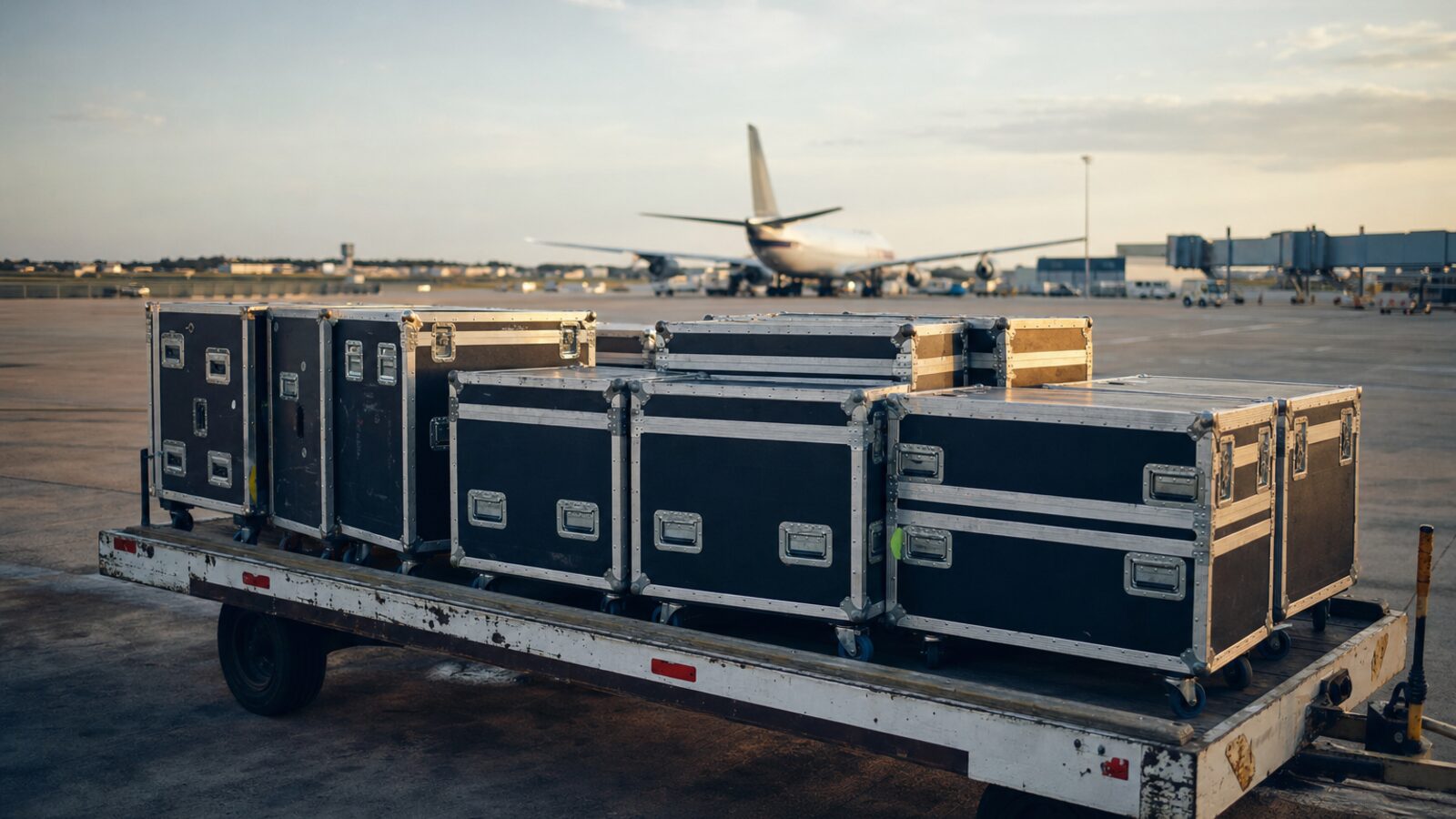
A fly date is a show where the touring party flies in instead of driving. Some tours are entirely fly dates; more commonly, they're one-offs within a driving tour.
When fly dates make sense
- Festivals and one-off shows far from the rest of your routing.
- Long gaps between cities where driving would cost more days than it saves.
- Overseas shows, where shipping a full production isn't practical.
- Small parties with little gear, such as solo artists or DJs.
How gear works on a fly date
You usually can't bring everything. Common approaches:
- Backline rental. The promoter or a local rental company supplies amps, drums and keyboards to your spec, as listed in your technical rider, the document setting out your production needs.
- Fly pack. A compact set of essentials that travel as checked bags or cases: guitars, pedalboards, in-ear packs, a console show file or a small control rig.
- House production. Using the venue's or festival's PA and lights, with your engineers bringing their show files.
Airline baggage rules, excess baggage charges and instrument policies vary by carrier and change, so check each airline before booking. Musicians with valuable instruments often need to plan carefully around cabin and checked-baggage options.
Pros
- Covers long distances fast.
- Can be the only practical way to do certain shows.
- Less fatigue than very long drives, if flights are well timed.
Cons
- Early flights, airport time and connections can make for long, tiring days.
- Risk of delays, missed connections and lost or damaged bags, which is a real problem if a bag holds show-critical gear.
- Ground transport is needed at both ends: airport pickups, a van or cars to the hotel and venue.
- Rented backline isn't your own gear, so expect some compromise.
- Crossing borders by air with equipment may require paperwork such as a carnet. See touring internationally.
Side-by-side comparison
| Van | Sleeper bus | Fly dates | |
|---|---|---|---|
| Typical party size | Small | Small to large | Any, with limited gear |
| Relative cost | Lowest | Higher per day, offset partly by fewer hotels | Varies; flights, bags and ground transport add up |
| Sleep while traveling | No | Yes | Not really |
| Who drives | Usually band or crew | Professional driver | No one; plus local ground transport |
| Gear | Backline, merch, some production | Backline, merch, production in trailer or trucks | Minimal; rent or use house gear |
| Best for | Short drives, tight budgets | Long runs with overnight drives | Long distances, one-offs, festivals |
How to choose for your tour
Ask these questions about your routing and party:
- How far apart are the shows? Look at drive times, not just distances, and include load-out time. If most drives would push past a reasonable day after a late finish, a van gets risky. Our guide to routing tours and travel days goes into this in detail.
- How many people are traveling? Once the party outgrows one vehicle, a second van can cost nearly as much as moving up to a bus.
- How much gear? If you carry production, you need a trailer or trucks. If you carry almost nothing, fly dates become more realistic.
- What does the budget allow? Compare the full cost of each option, including hotels, per diems, fuel, driver costs, flights and baggage, not just the vehicle rental. Work this into your tour budget.
- How long is the run? Rest matters more over weeks than days. What's fine for a long weekend can wear a band out across a month.
- Are there borders, ferries or islands? These can change the picture, add paperwork or force a hybrid plan.
Hybrid tours
Many tours combine methods. A common pattern is a bus for the main run with a couple of fly dates bolted on, where the band flies to a festival and the bus repositions without them. Another is flying into a region and picking up a van or bus there. When you do this, map out exactly where every person and every case is each day, because hybrid routes are where gear and people most often get separated.
Tracking who's on which vehicle, which flight and which hotel each day is where most of the transport admin lives, and tools like Conductour keep flights, ground transport and the itinerary in one place so the whole party can see the plan. Whichever option you pick, build in buffer time. Traffic, weather, breakdowns and delayed flights happen on every tour eventually.
Frequently asked questions
When is a tour bus worth it over a van? +
A bus starts to make sense when the touring party is too big for a van, drives between shows are long, and the money saved on hotels and the benefit of sleeping while traveling outweigh the higher daily cost. Many artists move up to a bus when overnight drives become the norm rather than the exception.
What is a fly date? +
A fly date is a show the artist and crew fly to instead of driving, usually carrying minimal gear and using backline and production supplied locally. Fly dates are common for festivals, one-off shows and dates far away from the rest of the routing.
Can you sleep on a tour bus while it drives? +
Yes, that's the main point of a sleeper bus. They have bunks, and the bus typically drives overnight to the next city while the band and crew sleep. Drivers must follow hours-of-service or driving-time rules, which can affect how far the bus can go in one stretch.
What is a splitter van? +
A splitter is a van with passenger seats in the front section and a separate cargo area for gear behind a partition. The term is especially common in the UK and Europe, and they're a popular choice for small touring bands.
Run your next tour on Conductour
Itineraries, show cues, travel, and crew — one timeline the whole team can trust.
Start for free