How to Plan a Concert Tour: A Step-by-Step Guide
To plan a concert tour, you set clear goals, book and route the dates, build a budget, assemble the crew, arrange travel and accommodation, prepare the production, and then advance every show before you arrive. The order matters: decisions about routing and budget shape everything that follows. How long it takes depends on the size of the tour, but bigger venues and international dates need much longer lead times.
Below is the process step by step, the way an experienced tour manager would approach it. Treat it as a framework rather than a rulebook; every tour, territory and deal is a little different.
Steps 1 and 2: Set the goal, then book and route the dates
Decide what the tour is for
Before anyone books a single date, the artist and their team should agree on the goal. It sounds obvious, but it drives every later decision.
- Promoting a release? You'll want dates clustered around the release, plus time for press and radio.
- Building an audience in new markets? You may accept lower fees or support slots in exchange for exposure.
- Making money? Then you need markets where demand is proven, and tight control of costs.
- Supporting a bigger act? The headliner's schedule sets the dates, and your job is to fit around it.
Also be honest about constraints: how many weeks people can be away, family and work commitments, health, and what the artist can sustain physically. A tour that looks good on paper but burns everyone out is not a good plan.
Book the shows and route the tour
Booking means securing the shows themselves, usually with a booking agent who negotiates with promoters and venues. Independent artists often book directly, which works but takes time and relationships.
As offers come in, the agent puts holds on dates at venues (a provisional reservation that turns into a confirmed booking once the deal is agreed). Venues often have several holds on the same night, ranked first hold, second hold and so on.
Routing is the order and geography of those dates. Good routing:
- avoids backtracking and zig-zagging across a region
- keeps drive times realistic, especially for overnight drives after a show
- groups dates by region so you don't pay for the same long journey twice
- places days off where people actually need them
- accounts for radius clauses, contract terms that stop you playing another show within a certain distance and time window of a booked date
Routing is where tours are won or lost financially. A beautiful offer in the wrong city can cost more in travel than it pays. We go deeper into this in routing tours and planning travel days.
Each show will also have a deal. Common types include a flat guarantee (a fixed fee), a versus deal (a guarantee versus a percentage of the box office, whichever is higher), and door deals where you take a share of ticket sales. You'll need to know what each date is likely to pay before you can budget, so keep a running list as offers are confirmed.
Step 3: Build the budget
Once you have a rough shape of the tour, build a tour budget: every expected cost line against every expected income line.
Typical cost categories:
- crew and band wages, and any retainers
- per diems (a daily allowance for food and incidentals)
- transport: van, bus, trucks, flights, fuel, tolls, parking
- hotels
- production: rented sound, lighting, backline, staging
- insurance, visas and work permits
- merch manufacturing
- agent and management commissions, which are typically a percentage of show income
- a contingency for the things that will go wrong
Income usually comes from show fees, merch sales, and sometimes tour support from a label or sponsorship.
If the numbers don't work, go back and change the plan: fewer people, cheaper transport, different routing, or a different mix of shows. It's far cheaper to fix a budget on a spreadsheet than on the road. Our guide to building a tour budget walks through each line.
Step 4: Assemble the team
The touring party depends on the size of the shows. A small club tour might be the band plus one person who drives, sells merch and manages everything. A larger tour might include:
- Tour manager: people, travel, schedule and money
- Production manager: the technical side of every show
- FOH engineer: front of house, mixing the sound the audience hears
- Monitor engineer: mixing what the performers hear on stage
- Backline techs: looking after instruments and amps (the backline)
- Lighting designer or operator
- Merch seller
- Drivers, and on bigger tours, riggers, video crew, security and more
Lock in key crew early, since good people are booked well ahead. Confirm dates, rates, per diems and travel arrangements in writing, and make sure everyone has the same understanding of what the job includes.
Step 5: Plan travel and accommodation
With routing confirmed, you can book how everyone gets from show to show and where they sleep.
Choosing transport
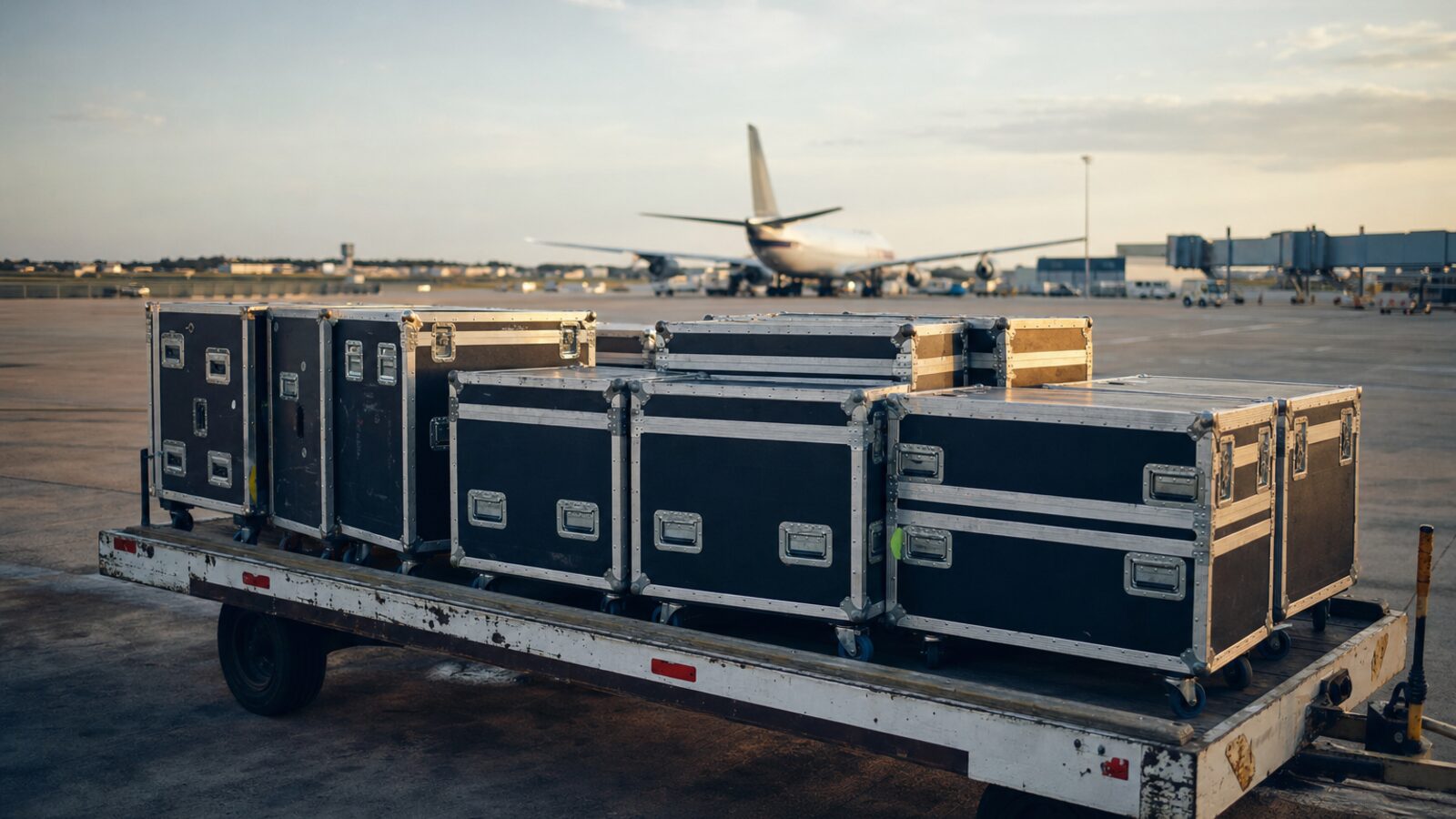
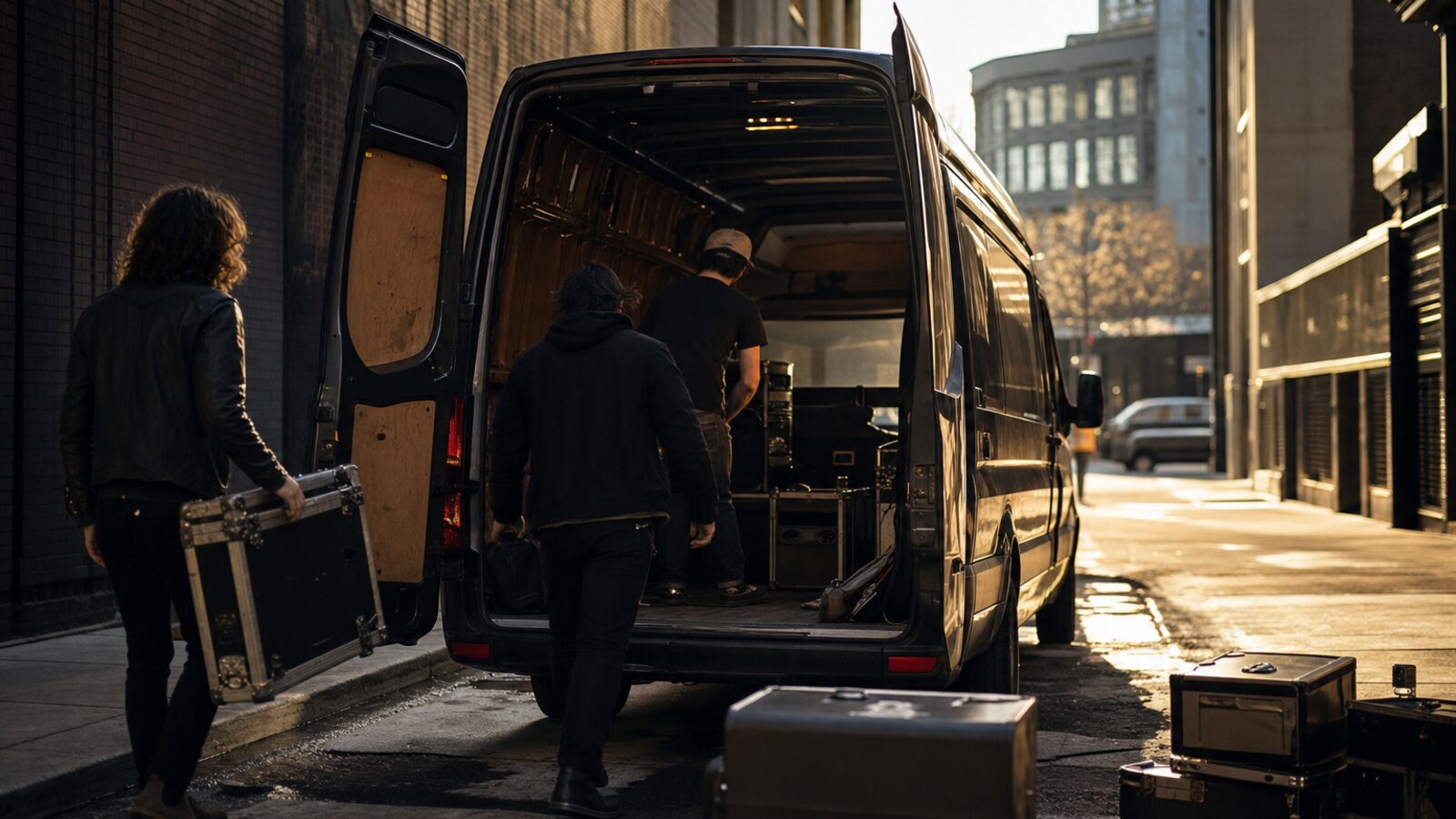
The main transport options are a van (cheapest, but everyone drives and sleeps in hotels), a sleeper bus (more expensive, but you travel overnight and arrive rested), or fly dates (flying between shows and renting or borrowing gear locally). Many tours mix these. The right choice depends on the distances, the budget, the size of the party and how much gear you carry.
Booking hotels
Book hotels with load-in times, parking for vans or buses, and the next day's departure in mind. Prepare a rooming list (who sleeps in which room) for each hotel. On bus tours, you may only need hotels on days off, plus a day room or two (a hotel room used during the day for showers and rest) on show days.
International dates
If you're crossing borders, start early. You may need work permits or visas for performers and crew, and an ATA carnet (a customs document for temporarily moving equipment between countries). Requirements differ by country and change regularly, so always check official government sources and consider using a specialist. See touring internationally: visas and carnets for an overview.
Step 6: Prepare the production
Production is everything technical that makes the show happen. Decide what you're carrying and what you'll rely on each venue to provide.
- Technical rider: a document listing what the show needs from the venue, such as sound, lighting, power, stage size and crew.
- Hospitality rider: what the artist and crew need backstage, such as food, drinks, towels and dressing rooms.
- Stage plot: a diagram of where everyone and everything sits on stage.
- Input list: every microphone and line input the sound engineer needs, numbered in order.
Keep these documents current and realistic. A rider that asks for things the band doesn't use, or that nobody has updated since the last lineup change, causes confusion on show day. Schedule rehearsals before the tour, and production rehearsals if there's a new show design.
Steps 7 and 8: Advance every show and build the day sheets
Advance every show
Advancing means contacting each venue or promoter ahead of the show to confirm every detail. It's usually done a few weeks out and finalized in the days before. You'll confirm:
- load-in time, address, parking and access
- the schedule: soundcheck, doors, set times, curfew (the latest the show can finish)
- technical needs against the venue's own equipment and staff
- hospitality, dressing rooms and catering
- guest list, passes and ticket holds
- merch arrangements and any venue commission on merch sales
- settlement: who will do it, when, and in what form you'll be paid
Write everything down and share it with the people who need it. Advancing is the step most likely to catch problems early. Our advancing shows checklist is a good place to start.
Build the itinerary and day sheets
All of this information comes together in two documents:
- The itinerary: the whole tour, date by date, with venues, hotels, travel, contacts and key times.
- Day sheets: a one-page schedule for each day, covering travel, lobby calls, load-in, soundcheck, set times, curfew and the hotel.
Distribute them before the tour and keep them updated. When plans change, and they will, make sure everyone sees the change. Spreadsheets and shared documents work for small tours; as tours grow, many teams move to tools like Conductour so the itinerary, day sheets and crew details live in one place everyone can check on their phone.
A rough planning timeline
Every tour is different, but the general order of work looks something like this. Treat the timing as illustrative; larger tours and international runs need much more lead time.
| When | What usually happens |
|---|---|
| Many months out | Set goals, agree on the tour window, start booking and routing |
| As offers confirm | Track deals, draft the budget, start hiring key crew |
| Two to three months out | Book transport and hotels, start visas and carnets if needed, finalize riders |
| Several weeks out | Start advancing shows, plan rehearsals, order merch |
| The final weeks | Finish advancing, build the itinerary and day sheets, confirm everyone's travel |
| On tour | Advance ahead of each date, update day sheets, settle every show, track money |
Common tour planning mistakes
- Routing for fees, not geography. A great offer can be wiped out by the travel to reach it.
- No contingency in the budget. Breakdowns, cancellations and lost gear happen.
- Too few days off. Tired people make mistakes and get sick.
- Starting paperwork late. Visas, permits and carnets can take a long time.
- Advancing too late, or not at all. Most show-day problems trace back to an incomplete advance.
- Information in too many places. If the crew has to search three email threads to find tomorrow's lobby call, someone will miss it.
Planning a tour is a lot of detail, but none of it is mysterious. Start with the goal, get the routing and budget right, and everything else gets easier.
Frequently asked questions
How far in advance should you plan a tour? +
It depends on the size of the venues. Club tours are often booked a few months out, while theater, arena and festival runs are commonly planned six months to a year or more ahead. Leave extra time for anything involving work permits or international travel.
Can a band book its own tour without an agent? +
Yes, many independent and emerging artists book their own shows by contacting venues and local promoters directly. It takes a lot of time and relationships matter, so artists usually bring in a booking agent once demand and fees grow.
What is tour routing? +
Routing is the order and geography of the dates: which cities you play, in what sequence, and how far you travel between them. Good routing keeps drives realistic, avoids backtracking, and leaves room for days off.
How much does it cost to go on tour? +
There's no standard figure. Costs depend on the number of people, the type of transport, hotels, production, wages and the territory. The only reliable way to know is to build a line-by-line budget for your specific tour and compare it with the likely income.
What is advancing a show? +
Advancing is contacting each venue or promoter before the show to confirm the details: schedule, load-in, technical requirements, hospitality, guest list and settlement. It's usually done a few weeks to a few days ahead of each date.
Run your next tour on Conductour
Itineraries, show cues, travel, and crew — one timeline the whole team can trust.
Start for free