What Does a Tour Manager Do? Roles, Skills and a Day in the Life
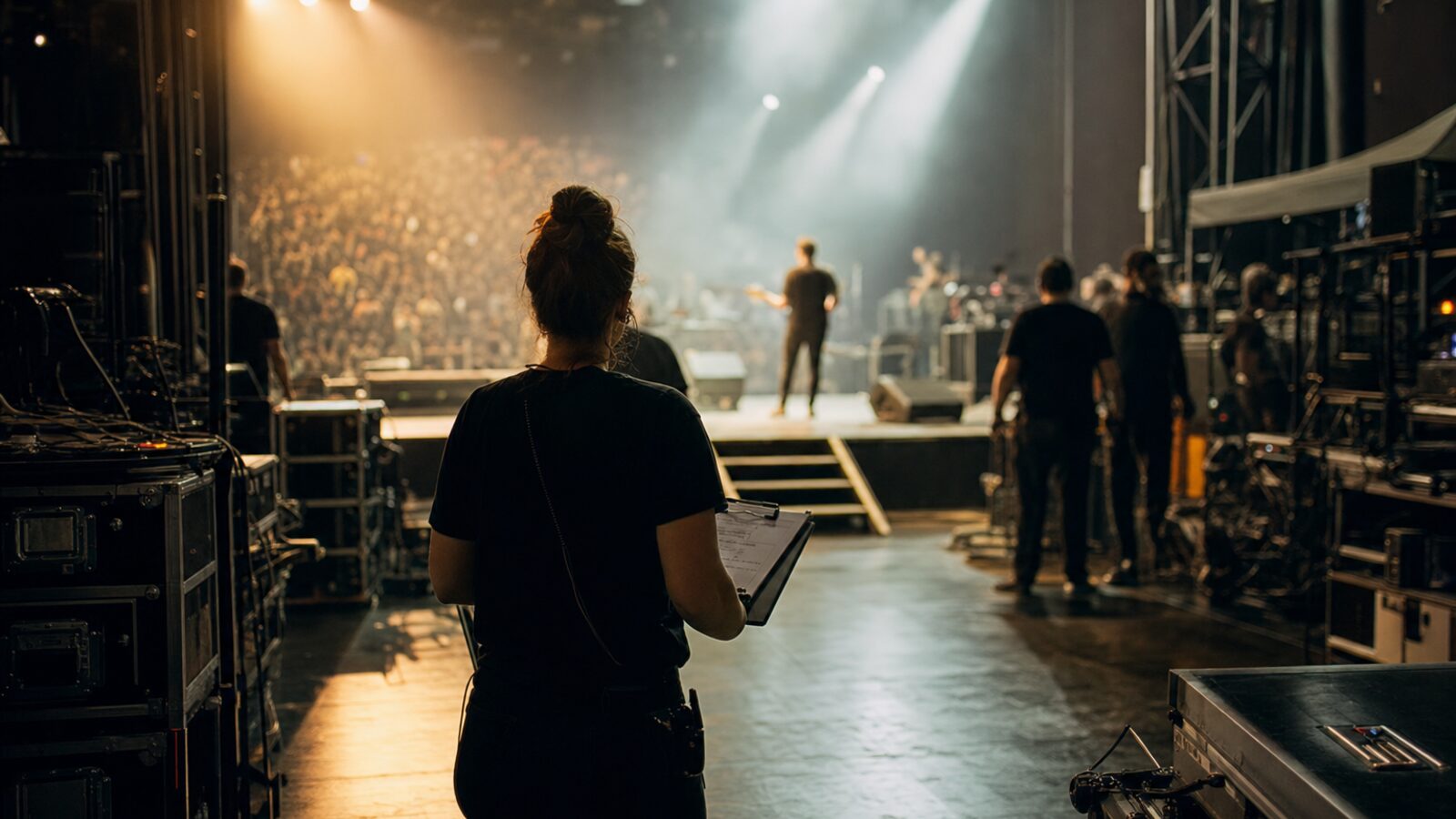
A tour manager (TM) is the person responsible for getting an artist and their touring party through a tour on time, on budget and in one piece. They handle the schedule, travel, hotels and money, advance each show with the venue, and act as the main point of contact between the artist, the crew, the promoters and the management office. If something goes wrong on the road, it lands on the tour manager's desk.
That's the short version. The longer version is that the job changes shape depending on the size of the tour, and most of it happens long before anyone walks on stage.
The tour manager's job in one sentence
The simplest way to think about it: the tour manager is the artist's manager on the road. The personal manager back at the office decides that a tour will happen, works with the agent on which dates to take, and signs off the budget. The tour manager turns that plan into reality, day by day, and protects the artist's time, health and money while it's happening.
On a small club tour, that might be one person who also drives the van, sells merch and mixes monitors. On an arena tour, the TM may lead a team with an assistant tour manager, a production manager, a tour accountant and a travel agent, and spend most of the day in an office backstage. The core responsibilities stay the same; what changes is how much you do yourself versus how much you delegate.
Core tour manager duties
Every tour is different, but these responsibilities show up on almost every TM's plate.
Before the tour
- Budgeting. Working with management to build and track the tour budget: wages, travel, hotels, per diems, production costs, and expected income.
- Travel and accommodation. Booking or approving flights, buses, vans, ferries and hotels, often with a specialist travel agent. Building the rooming list, the list of who is sleeping in which room at each hotel.
- Hiring and contracts. On many tours the TM helps hire crew, confirms rates and dates, and makes sure everyone knows what they're signed up for.
- Paperwork. Passports, work permits and visas, and an ATA carnet (a customs document that lets equipment cross borders temporarily without paying import duties) if gear is traveling internationally. Rules vary by country and change often, so this always means checking current official guidance.
- The itinerary. A full document (or app) with every date, venue, hotel, travel leg, contact and key time for the run.
During the tour
- Advancing. Contacting each venue or promoter ahead of the show to confirm times, load-in details, parking, hospitality, guest lists and settlement arrangements. "The advance" is the conversation where you find the surprises before they find you. Our advancing shows checklist walks through it in detail.
- Day sheets. Writing and distributing the daily schedule: lobby call (the time everyone meets to leave the hotel), travel, load-in, soundcheck, doors, set times, curfew (the hard time the show must finish) and the hotel for the night. See what is a day sheet.
- People. Keeping everyone informed, fed, rested and getting along. That covers the artist, the band, the crew, guests and support acts.
- Guest list and passes. Managing who gets in, with what level of access.
- Settlement. At the end of the night, sitting down with the promoter to go through the box office numbers and expenses, check them against the contract, and collect what the artist is owed. This is one of the most important things a TM does, and it's where experience really pays off.
- Money on the road. Handling cash floats, per diems (the daily allowance paid to each person for food and incidentals), receipts and daily expense tracking, and reporting back to management or the business manager.
After the tour
- Reconciling the final accounts and handing over receipts and settlement sheets.
- Returning rented equipment, closing out carnets, and chasing any outstanding payments.
- Writing down what worked and what didn't, so the next tour starts from a better place.
Tour manager vs. production manager vs. artist manager
These roles get confused a lot, especially by people just getting into the industry.
| Role | Main focus | Where they work |
|---|---|---|
| Artist (personal) manager | The artist's overall career: deals, releases, strategy, team | Mostly office-based, visits the tour occasionally |
| Booking agent | Selling shows to promoters and negotiating the deals | Office-based |
| Tour manager | People, travel, schedule, money and the advance for a specific tour | On the road for the full tour |
| Production manager | Technical delivery: stage, sound, lighting, rigging, trucks, production crew | On the road, or advancing production remotely |
| Promoter / venue rep | Running the local show: tickets, staffing, local crew, settlement on their side | Local to each show |
On smaller tours, the line between TM and PM disappears and one person does both. On bigger tours they work side by side, with the PM running the building from load-in to load-out and the TM running everything else. If you want the full map of who does what in a touring crew, see touring crew roles explained.
A day in the life on a show day
No two days are identical, but a typical show day for a TM on a mid-sized tour might look something like this. Times are illustrative; they depend entirely on the venue, the travel and the deal.
- Early morning. Check messages from the office and any time-zone-shifted emails. Confirm the bus or flights are on schedule. Make sure the day sheet went out the night before.
- Arrival at the venue. Meet the venue rep or promoter rep, walk the building, confirm the dressing rooms, production office, catering and parking. Check that what was advanced is what's actually there.
- Load-in and the afternoon. While production loads in and builds the stage, the TM handles hotel check-ins (or day rooms), guest list requests, interviews or press, laundry, and the next few days of advancing.
- Soundcheck. Keep it on time so doors aren't delayed. Make sure the artist knows when they're needed and when they're free.
- Doors and show. Manage the guest list and passes, look after the artist before the set, deal with anything that comes up at the stage or front of house, and keep an eye on the curfew.
- Settlement. Usually during or right after the headline set, the TM sits down with the promoter rep and goes through the numbers.
- Load-out and departure. Get everyone and everything back on the bus or to the hotel, confirm tomorrow's times, and send the next day sheet.
For a deeper look at how all those pieces fit together, our post on the anatomy of a show day breaks down each stage.
Days off and travel days aren't really days off for a TM. That's often when the advancing, accounting and next-week planning catch up.
The skills that actually matter
You'll see long lists of tour manager skills online. In practice, the ones that matter most are fairly consistent.
- Organization. You are holding dozens of moving parts across multiple time zones. You need a system, whether it's a spreadsheet, a binder or software, and you need to keep it current.
- Calm under pressure. Flights get canceled, gear gets lost, someone gets sick. The tour is looking at you, and the best TMs stay even-tempered and move straight to solutions.
- Communication. Clear, short, written-down communication. A day sheet people actually read. A message to the venue that leaves no room for misunderstanding.
- Numbers. You don't need to be an accountant, but you need to understand deals, read a settlement sheet, and spot when something doesn't add up.
- Diplomacy. You're managing relationships with the artist, the crew, the promoter, the agent and the management office, and sometimes their interests pull in different directions. Saying no politely is part of the job.
- Discretion. You see a lot of private things on the road. Trust is the currency of the role.
- Stamina. Long days, short nights, constant travel. Looking after your own health is part of doing the job well; the TM who burns out by week three helps nobody.
How people become tour managers
There's no single path and no required qualification. Common routes include:
- Coming up through the crew. Many TMs started as merch sellers, backline techs, drivers or production assistants, learned how tours work from the inside, and gradually took on more of the logistics.
- From the office side. Some come from management companies, booking agencies or promoters, where they learned contracts and advancing before going on the road.
- Growing with a band. A friend who started out handling everything for a local band sometimes keeps the job as the band gets bigger.
- Assistant TM roles. On larger tours, an assistant tour manager position is a direct way to learn from an experienced TM.
Some colleges and music business programs offer courses that touch on touring, and they can help with the vocabulary and the business side. But in this industry, reputation and referrals usually matter more than certificates. Most work comes through people who've seen you do the job well.
If you're starting out, small van tours are a tough but effective school. You'll do everything yourself, make mistakes on a scale you can survive, and learn what really matters.
What makes a tour manager good at the job
The best tour managers share a few habits:
- They advance thoroughly. Most show-day problems are really advance problems that nobody caught.
- They write things down. Every agreement with a venue, every change to the schedule, every receipt.
- They communicate before people need to ask. A crew that always knows tomorrow's lobby call trusts the TM with everything else.
- They protect the artist's time. Not every interview, meet-and-greet or request gets a yes.
- They keep the money clean. Accurate, timely accounting builds trust with management faster than almost anything else.
- They plan for the bad day. Backup travel options, spare cash, a list of local contacts, and a clear idea of what to do if someone gets sick.
A lot of the job comes down to keeping the itinerary, the schedule and the contact details accurate and in everyone's hands. Some TMs still do that with spreadsheets and PDFs; others use tools like Conductour to keep the itinerary, day sheets and crew details in one place that everyone on the tour can see on their phone.
However you work, the goal is the same: when the artist walks on stage, everything that could be handled has been handled, and the only thing anyone needs to think about is the show.
Frequently asked questions
Do tour managers travel with the band? +
Yes. A tour manager travels with the touring party for the whole run, usually on the same bus or flights, and is typically first up and last to bed. The point of the role is to be on site to solve problems as they happen.
What is the difference between a tour manager and a production manager? +
The tour manager looks after the people, travel, schedule and money. The production manager looks after the technical side: the stage, lighting, sound, rigging, trucks and the crew who run them. On smaller tours one person often does both, which is usually called a TM/PM.
Is a tour manager the same as the artist's manager? +
No. The artist's manager (sometimes called the personal manager) handles the artist's career over years: deals, releases, strategy. The tour manager runs a specific tour on the road and usually reports to the artist's manager.
How do you become a tour manager? +
There's no formal qualification. Most tour managers come up through other road jobs such as merch, backline, driving or production, or from an office role at a management company or agency, and build a reputation for being reliable. Small van tours are a common place to learn the job.
How much does a tour manager get paid? +
It varies widely with the size of the tour, the artist, the territory and the person's experience. Pay is commonly a day or weekly rate plus per diems, and it ranges from modest on club tours to substantial on arena and stadium tours. Ask other tour managers in your market for current rates rather than relying on published figures.
Run your next tour on Conductour
Itineraries, show cues, travel, and crew — one timeline the whole team can trust.
Start for free