Touring Crew Roles Explained: Who Does What on a Music Tour
A touring crew is the group of people who travel with an artist to make the show happen every night. On a typical tour that means a tour manager running the people and the money, a production manager running the show's technical side, audio engineers for front of house (FOH) and monitors, a lighting designer or director (LD), and backline techs who look after the band's instruments. Bigger tours add riggers, video, carpenters, wardrobe, merch and drivers; small tours combine several of these jobs into one or two people.
Titles and boundaries vary between tours, genres and countries, so treat this as a map of how it usually works rather than a rulebook.
The two leaders: tour manager and production manager
Most crews have two lines of responsibility, and it helps to understand them before anything else.
Tour manager (TM)
The tour manager is responsible for the artist, the touring party and the business of each day. That typically includes travel and hotels, the daily schedule, the day sheet (the one-page plan for each day), guest lists, settling the show with the promoter, handling the tour's cash and float, and being the artist's main point of contact on the road. When something goes wrong that isn't a piece of gear, it usually lands with the TM.
We go deeper on the job in what does a tour manager do.
Production manager (PM)
The production manager is responsible for the show as a physical thing. The PM advances technical details with each venue (power, rigging points, stage dimensions, load-in access, local crew numbers), manages the production budget, books or coordinates the touring crew and equipment vendors, and makes sure the load-in, show and load-out run safely and on time.
On small and mid-sized tours you'll often see one person do both, titled TM/PM. As tours grow, the jobs split, and on large productions the PM may have a production coordinator and stage manager under them.
Audio: FOH, monitors and systems
FOH engineer
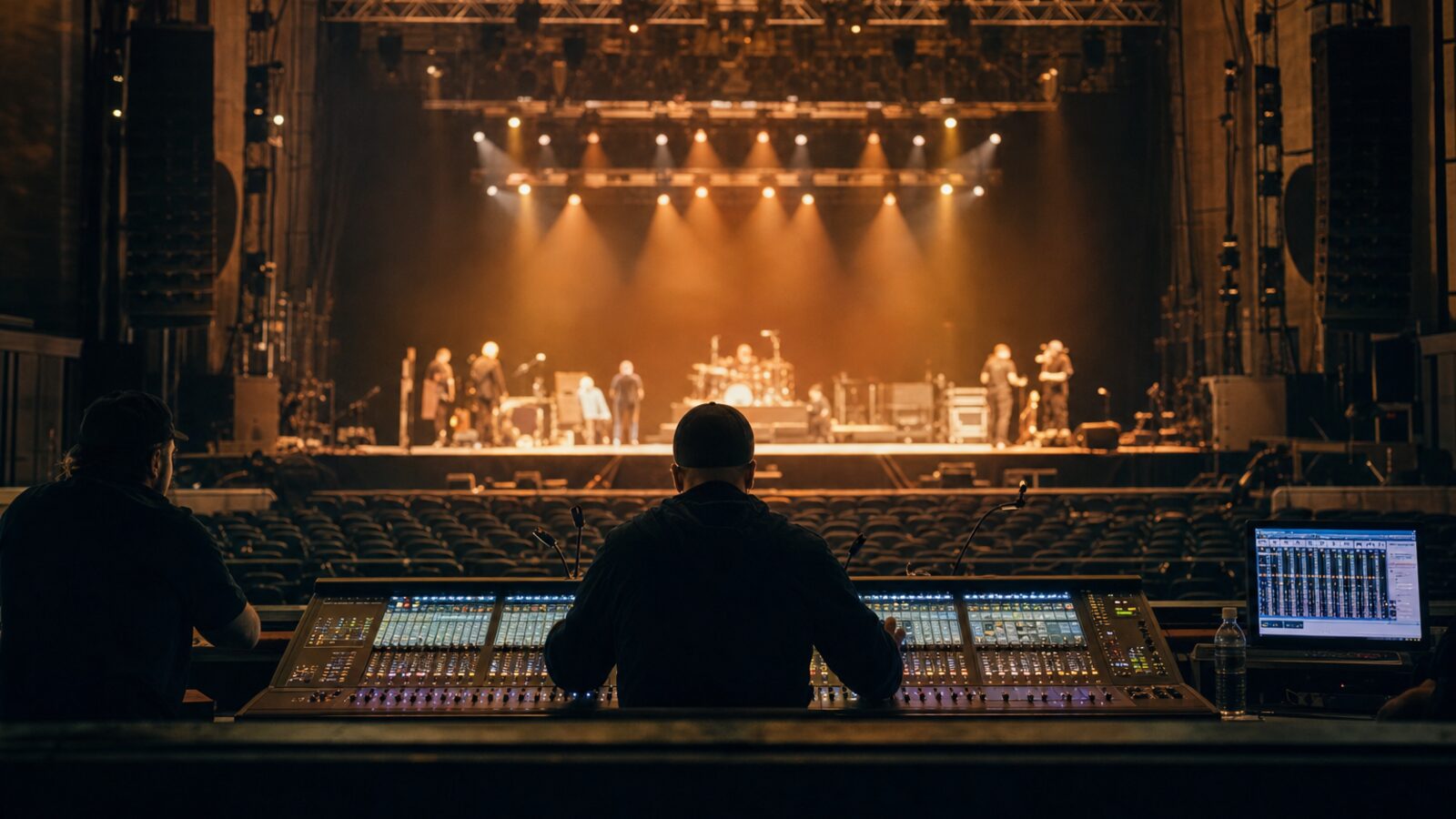
The front of house engineer mixes what the audience hears. They sit at the mixing desk out in the room, build the mix during soundcheck and run it during the show. They usually travel with their own show file (the saved desk settings) and sometimes their own console, and they advance audio details with each venue: what PA is installed, what desk is available, and whether the touring desk can be patched in.
The FOH engineer is often the most senior audio person on the tour and may double as the crew's informal audio lead.
Monitor engineer
The monitor engineer mixes what the performers hear on stage, through wedges (floor speakers) or in-ear monitors. Each musician typically has their own mix, so a monitor engineer might be running many separate mixes at once and responding to hand signals mid-song. They usually sit at the side of the stage, often called "monitor world."
Smaller tours frequently skip a dedicated monitor engineer and rely on the house monitor tech, or have the FOH engineer mix monitors from FOH, which is more common now that in-ear systems are widespread.
Systems engineer and audio techs
When a tour carries its own PA, a systems engineer (or PA tech) is responsible for hanging, aligning and tuning the speaker system for each room. Additional audio techs handle stage patching, microphone setup, wireless systems and RF coordination (managing radio frequencies for wireless mics and in-ears so they don't interfere). Tours that use house PA generally don't carry a systems engineer.
Lighting and video
Lighting designer vs. lighting director
These two titles get mixed up constantly, and both are abbreviated LD.
- The lighting designer creates the look of the show: the rig, the colors, the cue list, the programming.
- The lighting director operates that design on tour each night, adapting it to each venue's rig.
Sometimes the designer tours and operates their own show. Sometimes they design it in rehearsals and hand it to a director who runs it on the road. On club tours, the LD might be carrying only a console or a programmed show file and working with whatever fixtures the venue has.
Lighting techs
When a tour carries its own lighting rig, lighting techs (sometimes called "lampies" in the UK) build, focus, maintain and strike it. A crew chief often leads the lighting team on bigger tours.
Video
Tours with screens, LED walls or camera direction carry a video team: a video director who cuts cameras live, camera operators, LED techs who build the walls, and sometimes a media server operator who runs playback content. On smaller tours, video content might simply be a playback file triggered by the LD.
Backline and stage
Backline techs
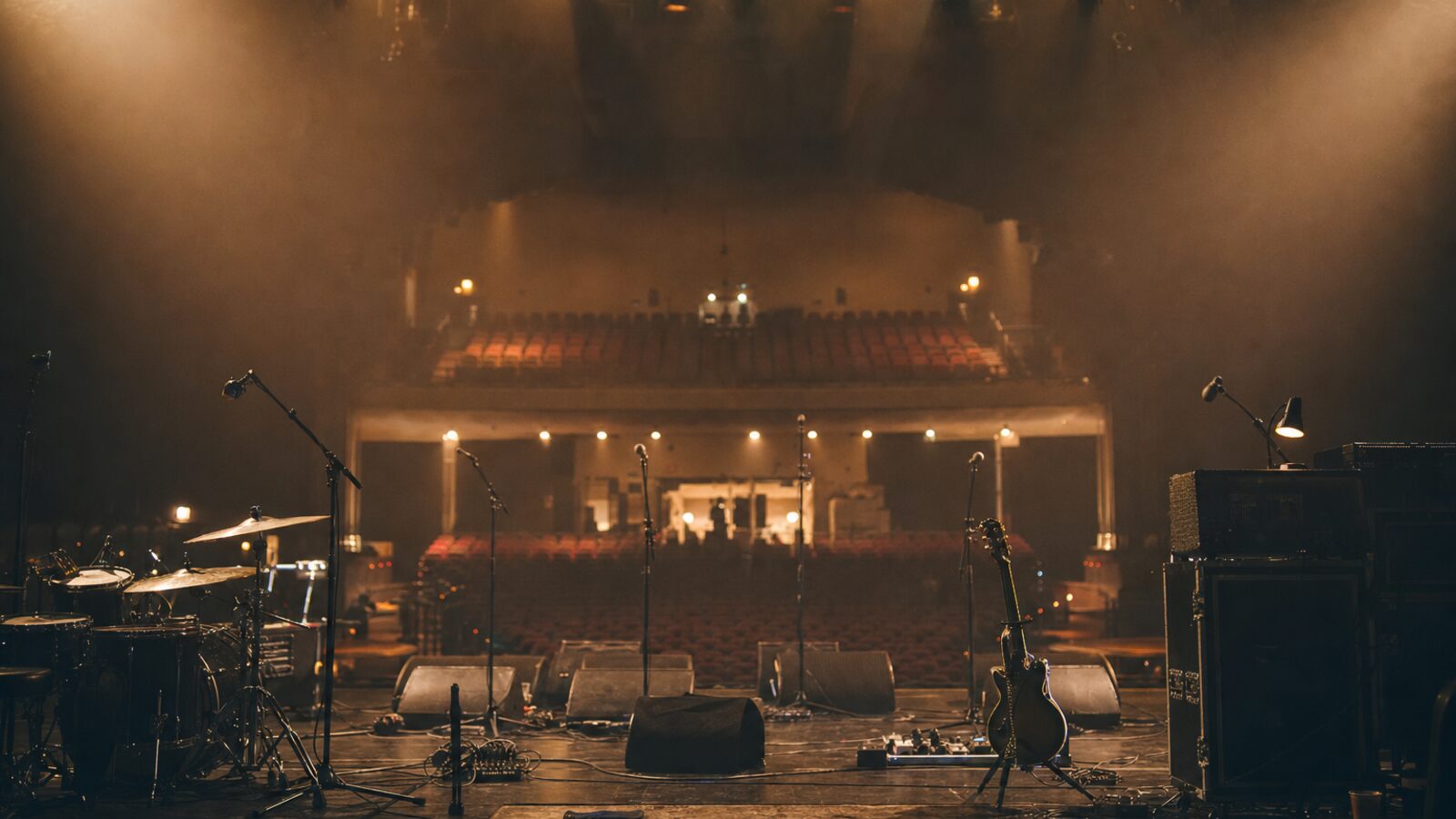
Backline means the band's on-stage instruments and amplification: guitars, amps, drums, keyboards, bass rigs. Backline techs set it up, tune and maintain it, restring guitars, swap instruments between songs and fix problems mid-show. Big tours have specialists, such as a guitar tech, drum tech and keyboard tech. Smaller tours might have one backline tech covering the whole band, or no tech at all, with musicians setting up their own gear.
Backline techs work closely with the artist and are often the crew members musicians trust most.
Stage manager
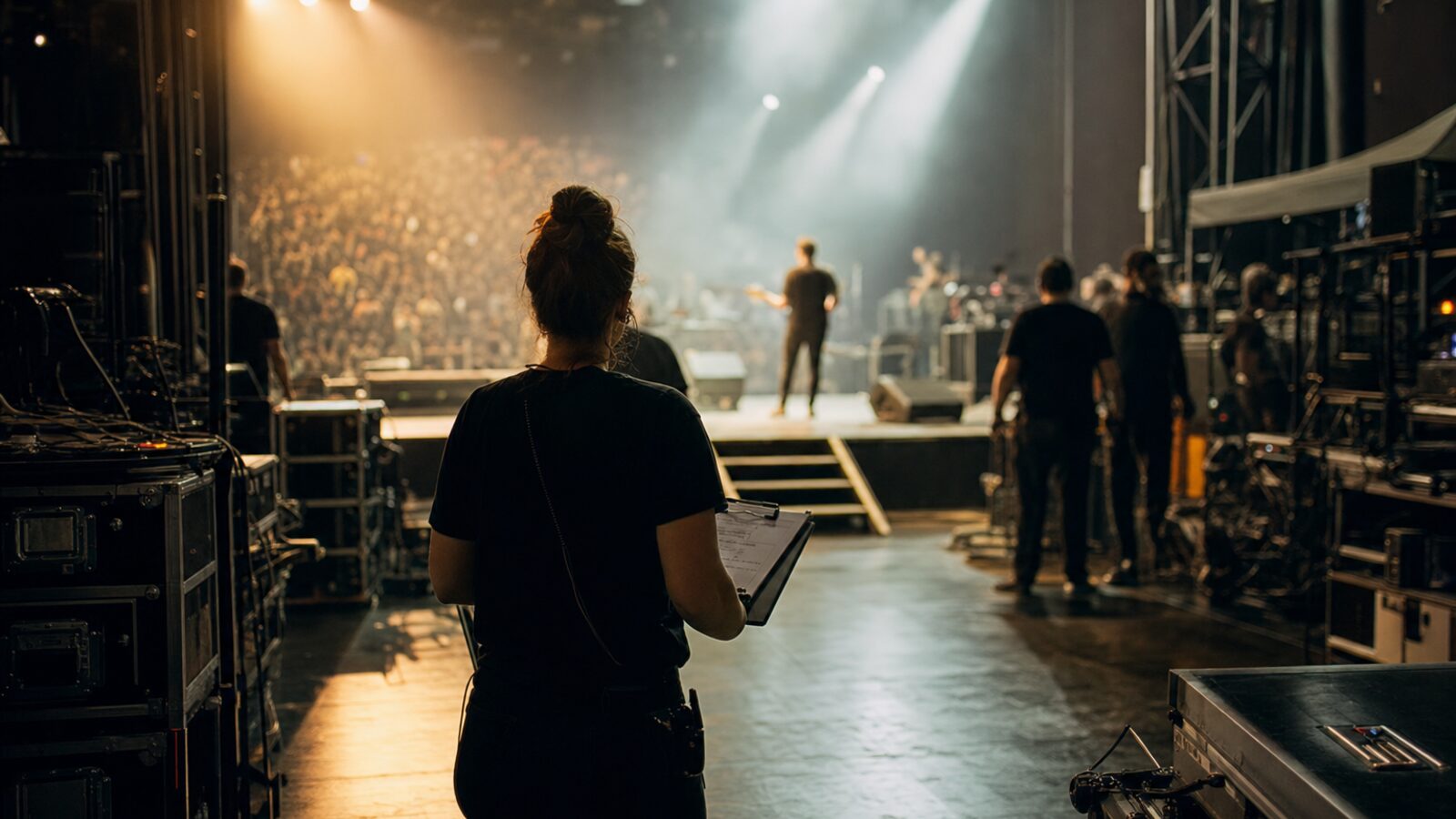
The stage manager runs the stage itself: the schedule on the day, the changeover between support acts and headliner, cueing the show start, and keeping the stage area safe and clear. On festival stages and larger venues, the stage manager is often a venue or promoter employee rather than touring crew. On larger tours, the production may carry its own stage manager.
Riggers, carpenters and other stage roles
- Riggers hang equipment from the venue's roof structure: motors, truss, PA, lights and video. It is skilled, safety-critical work, and tours carrying large rigs usually bring a head rigger who works with local riggers.
- Carpenters build and strike staging, risers, set pieces and decking.
- Pyro and special effects techs handle pyrotechnics, flame, confetti and similar effects, and generally need licensing that varies by country and region.
The people side: support roles around the show
Not everyone on a crew touches the gear.
| Role | What they do |
|---|---|
| Production coordinator | Supports the PM with advancing, paperwork, crew logistics and the production office |
| Tour accountant | Manages tour finances, settlements and reporting on larger tours |
| Merch manager / seller | Runs merchandise sales, counts stock in and out, and settles merch with the venue |
| Wardrobe | Looks after stage clothing: cleaning, repairs, quick changes |
| Hair and makeup | Prepares the artist for shows, photo shoots and appearances |
| Security / personal security | Protects the artist and manages access around them |
| Drivers | Bus and truck drivers, plus sometimes a runner or local driver per city |
| Assistants / PAs | Help the TM or artist with whatever the day needs |
| Catering | Feeds the crew and band, on tours big enough to carry their own catering |
Merch has its own conventions too, such as counting stock in and out every night and paying the venue a share of sales (often called a hall fee or merch fee) where the venue charges one.
Touring crew vs. local crew
Every show involves two kinds of crew.
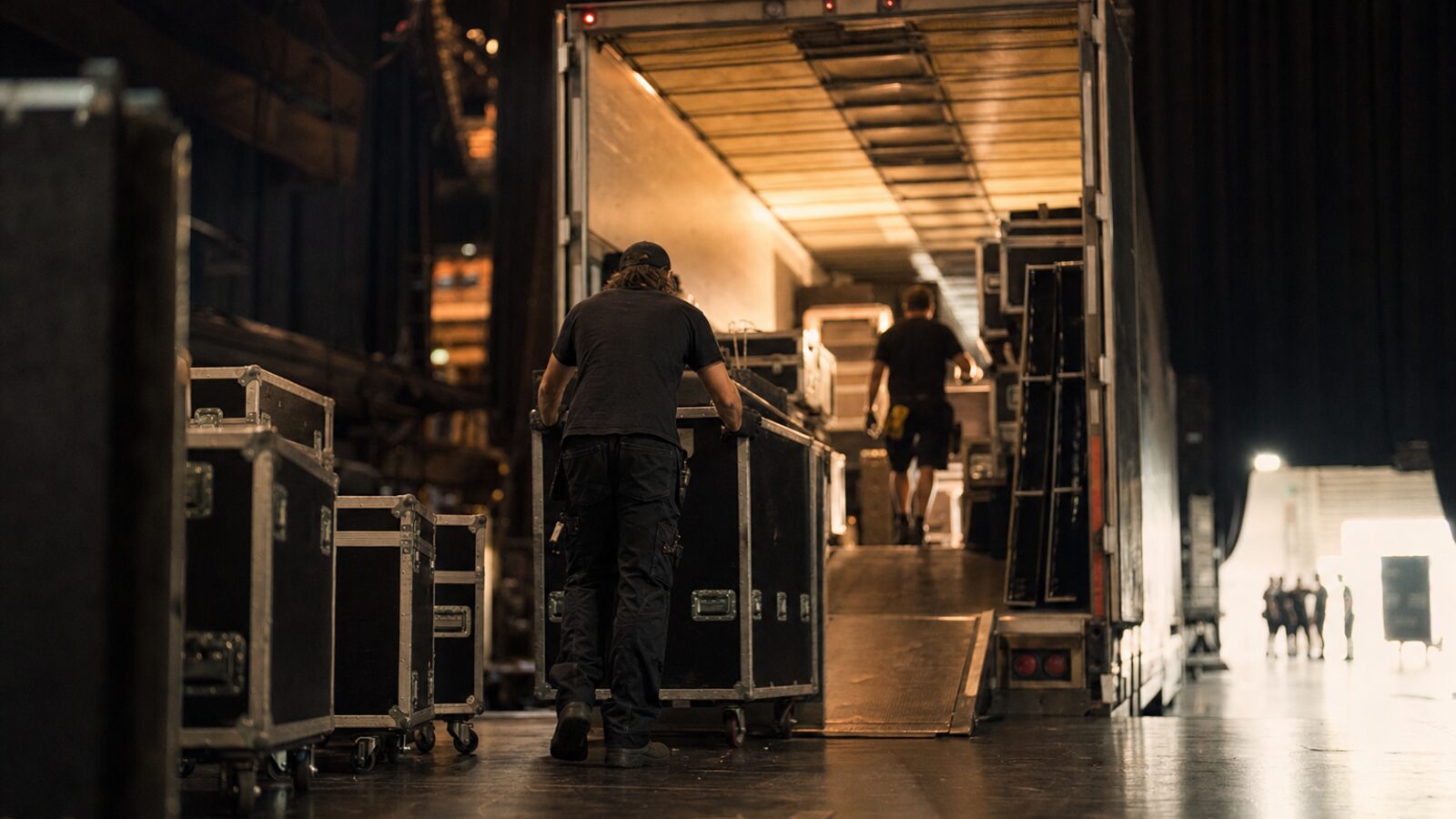
Touring crew travel with the artist, know the show inside out and work every date. Local crew are hired for one show by the venue or promoter: stagehands, loaders (who unload trucks), local riggers, spot operators, forklift drivers and runners. In some cities and venues, local crew are union members, and union rules can affect minimum calls, breaks and who is allowed to touch what. Your advance is where you find out.
How many local crew you need is part of the advance, the process of confirming every detail with the venue before the show. Asking for too few slows down load-in; asking for too many costs the promoter, and often you, money.
How crew size changes with the tour
There isn't a standard crew size, but here is roughly how things scale.
Van and club level
A small club tour might travel with just the band and one or two crew. A common combination is a TM who also sells merch, plus an FOH engineer who also handles stage setup. Everyone loads gear, and band members often handle their own backline.
Theater and mid-sized venues
As shows grow, the tour usually adds a dedicated TM, FOH and monitor engineers, an LD, one or more backline techs, a merch seller, and a production manager or TM/PM. The tour may carry its own console, lighting control and some lighting or set pieces, but rely on house PA and rigs.
Arena and stadium
Large productions carry nearly everything: PA, lighting, video, staging, rigging, sometimes power, all moved in a fleet of trucks. The crew can number in the dozens or more, split into departments (audio, lighting, video, rigging, carpentry, wardrobe, catering, production office), each with a crew chief reporting up to the production manager.
Who reports to whom
Reporting lines vary, but a common pattern looks like this:
- Artist and management sit at the top; management usually hires the TM.
- Tour manager reports to management and handles the touring party, schedule and money.
- Production manager reports to management (or to the TM on smaller tours) and runs the technical crew.
- Department heads (FOH, LD, head rigger, video director) report to the PM.
- Techs report to their department head.
The TM and PM work as partners. On a good tour they talk constantly, because travel times, show schedules and load-in plans affect each other every single day. If you're planning the schedule side, anatomy of a show day walks through how these roles line up across a typical day from load-in to load-out.
Keeping a growing crew organized
The more people on the road, the more the communication matters: who is on which bus, who is flying ahead, who is off for a day and who is covering. Most tour managers keep a crew list with roles, contact details and travel, and update it every time something changes. A shared system such as Conductour can keep the itinerary, day sheets and crew details in one place, so everyone is reading from the same version.
If you're starting out, the best way to learn these roles is to work alongside them. Most crew are generous with what they know when you show up on time, listen and help load the truck.
Frequently asked questions
What is the difference between a tour manager and a production manager? +
The tour manager looks after the people and the business of the tour: travel, hotels, money, schedules and the artist's day. The production manager looks after the show itself: gear, trucks, crew, venue technical requirements and getting the stage built and struck safely. On smaller tours one person often does both, usually titled TM/PM.
What does FOH stand for? +
FOH stands for front of house, the area out in the audience where the main mixing desk sits. The FOH engineer mixes the sound the audience hears. People also say 'FOH' to mean the mix position itself, as in 'meet me at FOH.'
Do touring crew members work every show or just some? +
Core touring crew normally work every show on the run and travel with the artist. Local crew, such as stagehands, loaders and riggers, are hired by the venue or promoter for each individual show and don't travel.
How do people get into touring crew jobs? +
Most start in local venues, production companies or rental shops, working as stagehands or techs, then move onto tours through people they've worked with. Reliability and reputation count for a lot, because crew are very often hired on recommendation.
Run your next tour on Conductour
Itineraries, show cues, travel, and crew — one timeline the whole team can trust.
Start for free