What Is a Day Sheet? How Tours Run on One Page a Day
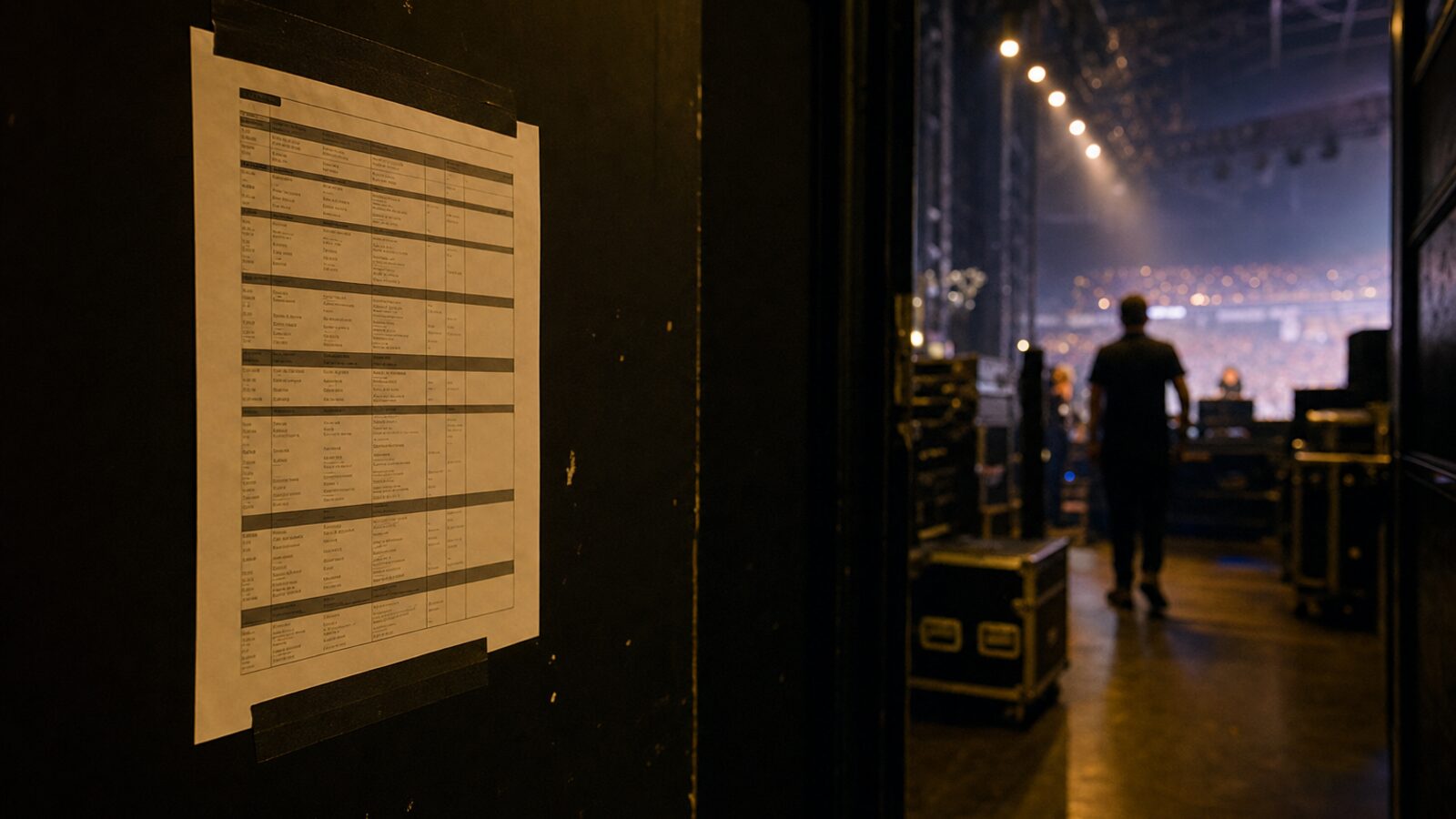
A day sheet is a one-page schedule for a single day on tour. It tells everyone in the touring party where to be, when, and how they're getting there: travel, hotel, venue address, load-in, soundcheck, doors, set times, curfew and key contacts. The tour manager usually writes it and sends it out the night before.
If the itinerary is the map of the whole tour, the day sheet is today's page. It's the document people check most often, and on a well-run tour it's the single source of truth for the day.
Why day sheets matter
On tour, almost every day is in a different city, with a different venue, a different hotel and a different set of times. People are tired, often jet-lagged, and constantly in transit. Nobody can hold all of that in their head.
The day sheet solves that by answering, in one place, the questions everyone asks:
- What time do we leave?
- Where are we going, and how long does it take?
- When is load-in, soundcheck, doors, and our set?
- Where are we sleeping tonight?
- Who do I call if something's wrong?
A good day sheet cuts the number of repeated questions the tour manager gets each day, and more importantly, it means that when times change, there's one place everyone knows to check.
What goes on a day sheet
Every tour has its own format, but most day sheets include the same core information. The detail depends on the size of the tour and whether it's a show day, travel day or day off.
The header
- Date and day number of the tour (for example, "Day 12 of 34")
- City and day type: show day, travel day, day off, rehearsal, promo
- Time zone, especially if you've crossed one overnight
Travel
- Lobby call: the time everyone meets in the hotel lobby, checked out and ready to go
- Bus call or departure time, and where the vehicle is parked
- Flight numbers, departure and arrival times, terminals and confirmation references
- Drive time and distance to the next stop
- Notes such as border crossings or ferry times
Venue details
- Venue name, address and the load-in address if it's different
- Parking instructions for vans, buses and trucks
- Venue capacity and any notes from the advance
- Production office location, dressing room assignments, Wi-Fi details
The schedule
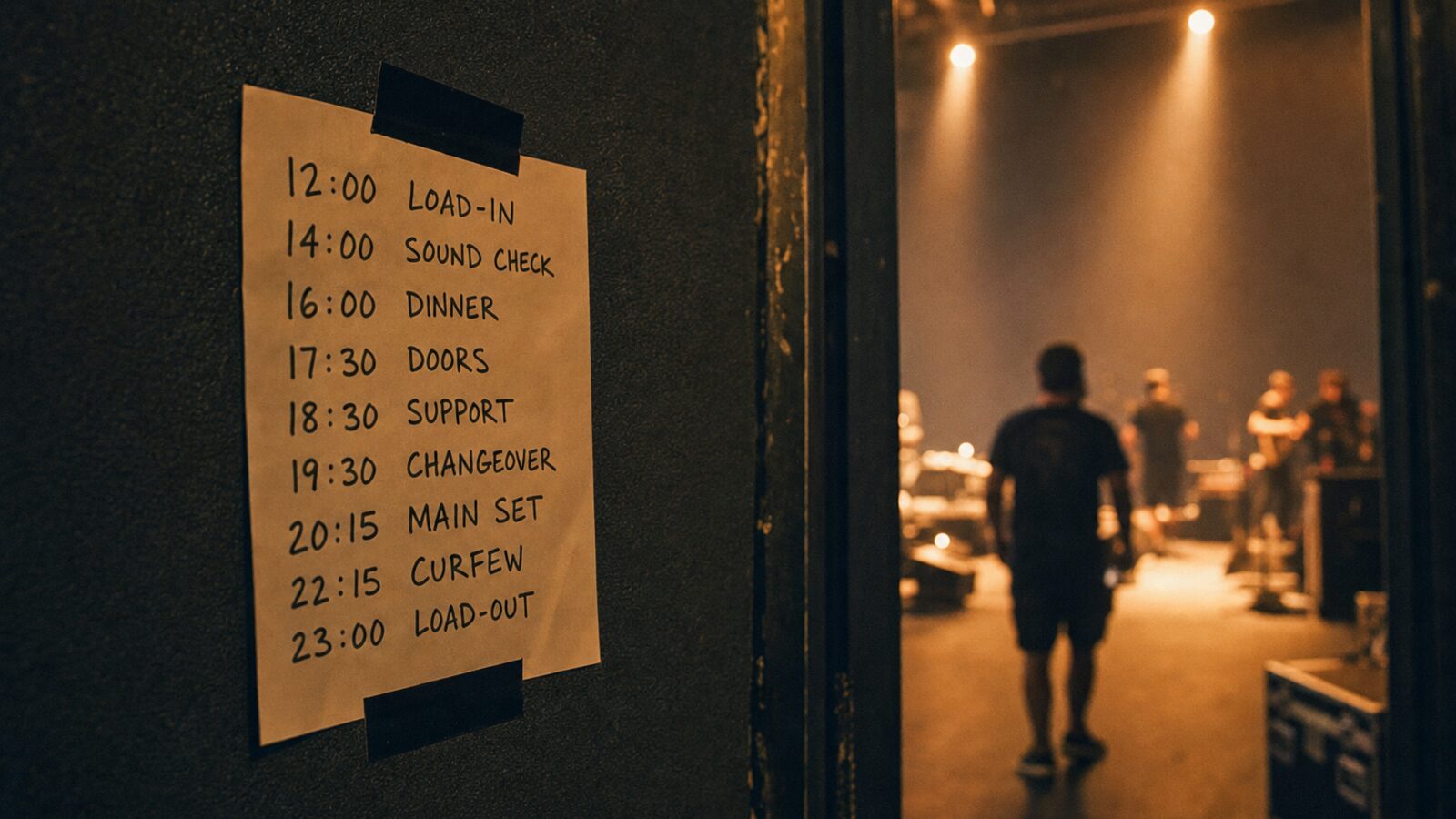
This is the heart of the sheet. A typical show-day schedule includes:
- Load-in: when the crew starts bringing in gear
- Soundcheck times for the headliner and support acts
- Catering or meal times
- Doors: when the audience is let in
- Set times for each act, in order
- Curfew: the hard time the show must finish, often set by the venue or local regulations
- Load-out and bus call after the show
For a closer look at what each of these times means, see show call times explained.
Accommodation
- Hotel name, address and phone number
- Check-in and check-out times
- Whether there's a day room (a room booked for daytime use, for showers and rest)
- Distance from the venue
Contacts
- Promoter rep and venue production contact, with phone numbers
- Local runner or driver
- The tour manager's and production manager's numbers
- Nearest hospital or urgent care for the day, which is easy to forget until you need it
Notes
The notes section catches everything else: press commitments, meet-and-greets, guest list deadlines, laundry, merch counts, local weather, a reminder about the time change, or a warning that the loading dock has a steep ramp.
An example day sheet
Here's a simplified example of how a show-day sheet might be laid out. The venue, hotel and times are made up for illustration; real schedules vary a lot by venue, city and deal.
| Date | Thursday, Day 12 of 34 |
| City | Anytown |
| Day type | Show day |
| Lobby call | 9:30 AM, Riverside Hotel lobby |
| Bus call | 9:45 AM |
| Drive | About 4 hours to the venue |
| Venue | The Example Theater, 100 Main St (load-in at rear dock, 2nd Ave) |
| Load-in | 2:00 PM |
| Soundcheck | Headliner 4:30 PM, support 5:30 PM |
| Dinner | 6:00 PM, catering room |
| Doors | 7:00 PM |
| Support set | 8:00 to 8:40 PM |
| Headline set | 9:15 to 10:45 PM |
| Curfew | 11:00 PM |
| Bus call | 1:00 AM, overnight drive |
| Hotel | None tonight (day room at the Riverside until 3:00 PM) |
| Contacts | Promoter rep, production manager, TM (numbers listed) |
| Notes | Radio interview 3:30 PM. Guest list closes 5:00 PM. |
On a real tour, the sheet would usually include a more detailed contact list and the specifics from the advance.
Who writes it, and when it goes out
On most tours the tour manager writes the day sheet. The information comes from advancing, the process of confirming every detail with the venue or promoter before the show. The better the advance, the more accurate the day sheet. If you want to tighten that part of the process, our advancing shows checklist covers what to confirm.
On bigger tours, an assistant tour manager may assemble it, with the production manager providing the technical schedule. The TM still signs off, because the day sheet is ultimately their promise to everyone about how the day will run. (For more on the role, see what does a tour manager do.)
Timing
Common practice is:
- The night before: the next day's sheet goes out, often after the show or once the overnight travel is confirmed.
- The morning of: any updates are sent, clearly marked as changes.
- At the venue: printed copies are often posted in the dressing rooms, production office and crew areas, and on the bus.
Times will change during the day. A soundcheck runs late, doors get pushed, or a set time moves. When that happens, update the sheet and tell people directly. A day sheet that's out of date is worse than none, because people trust it.
Show days, travel days and days off
Not every day needs the same level of detail.
- Show days need the full sheet: travel, venue, schedule, hotel, contacts and notes.
- Travel days focus on departure times, flight or drive details, arrival, and the hotel. If the party is split across different flights or vehicles, make that obvious.
- Days off still need a sheet: the hotel, any group plans, the next day's lobby call, and a reminder of anything to deal with, like laundry or a visa appointment.
If you want to see how a full show day unfolds hour by hour, our anatomy of a show day walks through it.
How to make a day sheet people actually read
A day sheet only works if people read it. A few habits help:
- Keep it to one page. Put the full contact list and long notes in the itinerary, and only today's essentials on the sheet.
- Put the most important times first. Lobby call and bus call should be impossible to miss.
- Use the local time, and say which zone. On days with a time change, call it out clearly.
- Be consistent. Same layout every day, so people know where to look.
- Mark changes clearly. If something moves, flag it as updated rather than silently editing it.
- Don't guess. If something isn't confirmed, say "TBC" (to be confirmed) rather than writing a time that might be wrong.
- Make it easy to reach on a phone. Most people will check it on their phone in a hallway, not on a printed sheet.
- Tailor when needed. Crew may need load-in and production notes that the artist doesn't, and the artist may have press commitments the crew doesn't need to see.
Paper, PDF or app
Day sheets have traditionally been typed up in a word processor or spreadsheet, exported to PDF, emailed out and printed for the venue walls. That still works, especially on small tours.
The weak point is changes. When the soundcheck moves, the PDF in everyone's inbox is suddenly wrong, and you're relying on everyone seeing the update. That's why many tours now use shared, live documents or touring apps. Tools like Conductour, for example, keep each day's schedule in one shared place, so when a time changes, everyone sees the update on their phone.
Whatever format you use, the principle is the same: one page, one source of truth, and the right times in front of the right people.
Frequently asked questions
Who writes the day sheet on tour? +
Usually the tour manager, using information gathered while advancing the show. On larger tours an assistant tour manager may prepare it, with the production manager supplying the technical times.
When is the day sheet sent out? +
Most tour managers send it the night before, often after the previous show or once travel is confirmed. It's then updated on the day if anything changes, and printed copies are often posted around the venue.
What is the difference between a day sheet and an itinerary? +
The itinerary covers the whole tour, date by date. The day sheet zooms in on a single day with the detailed schedule, addresses and contacts for that day only.
Do you need a day sheet for days off and travel days? +
Yes, most tours issue one. It's usually shorter, but it still tells people when and where to meet, how they're traveling, and where they're sleeping.
What does 'lobby call' mean on a day sheet? +
Lobby call is the time everyone needs to be in the hotel lobby, checked out and ready to leave. It's one of the most important times on the sheet, because being late holds up the whole party.
Run your next tour on Conductour
Itineraries, show cues, travel, and crew — one timeline the whole team can trust.
Start for free