How Show Settlement Works: Guarantees, Versus Deals and Door Deals
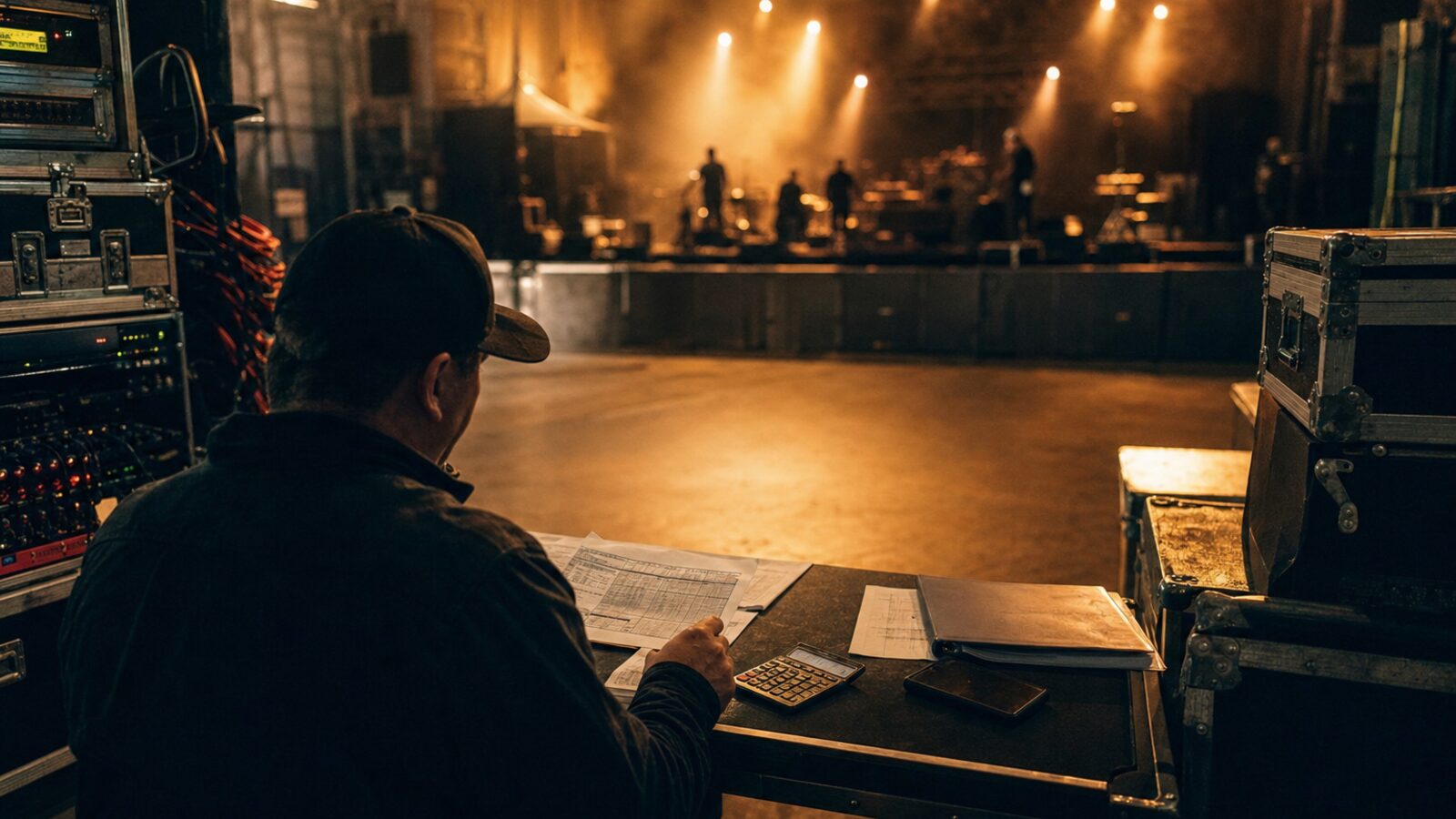
Show settlement is the meeting at the end of the night where the artist's representative and the promoter go through the box office numbers and show expenses, calculate what the artist is owed under their deal, and agree on the payment. On a flat guarantee, settlement is mostly a formality. On a versus deal, plus deal or door deal, the artist's pay depends on ticket sales and costs, so the math and the paperwork really matter.
Deal structures, terminology and allowable deductions vary by territory, promoter, agent and venue. What follows is how settlement generally works, not a template for any specific contract.
What happens at settlement
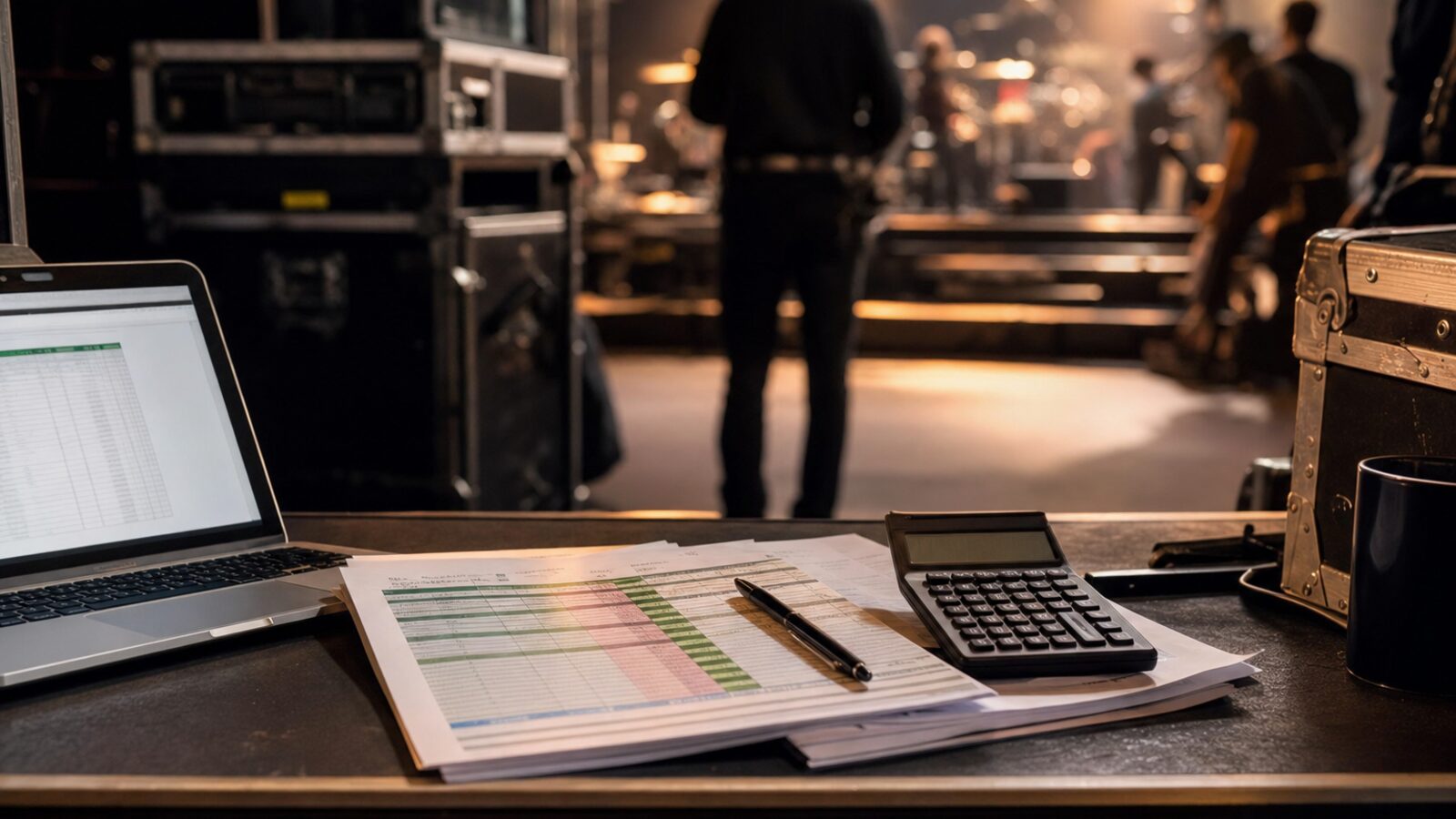
Settlement usually happens during or right after the headline set, often in the promoter's or venue's office. The promoter's rep brings a settlement sheet: a summary showing tickets sold, gross receipts, deductions, show expenses and the resulting payout. The artist side, typically the tour manager or a tour accountant on larger tours, checks it against the contract and the advance, asks questions, and signs off once both sides agree.
The documents you'll typically see:
- The contract or deal memo: the agreed deal, including the guarantee, percentage and any expense caps.
- The box office statement (sometimes called the ticket audit or "drop count"): tickets sold by price level, comps and unsold tickets.
- The expense sheet: the costs the promoter is claiming against the show, often with receipts or invoices attached.
- The settlement sheet: the final calculation and the amount due.
Payment then happens however the contract specifies, whether that's cash, check or wire transfer, minus any deposit already paid.
Key terms you need to know
- Guarantee: a fixed fee the artist is paid regardless of ticket sales.
- Deposit: a portion of the guarantee paid in advance, often to the booking agent, who forwards it to the artist after taking commission. The settlement payment is then the balance.
- Gross box office receipts (GBOR): total ticket revenue at face value.
- Net box office receipts (NBOR): gross minus the deductions the contract allows, which commonly include sales taxes and certain ticketing or facility fees.
- Show expenses: the promoter's costs of putting on the show, such as venue rent, production, local crew, advertising, security, catering and insurance. They are usually listed in the contract, sometimes with a cap.
- Comps: complimentary tickets, given free. Contracts often limit how many the promoter can issue.
- Kills: seats taken off sale, for example because the stage or mix position blocks the view.
- Split point: in a plus deal, the amount the show must earn before the artist starts receiving a percentage.
- Walkout: the final amount the artist walks out with on the night.
The main deal types
Flat guarantee
The simplest deal: the artist is paid an agreed fee, and the promoter carries all the risk and keeps all the upside. Settlement is about confirming the balance due and handling any agreed extras or deductions, such as buyouts. A buyout is a cash payment in place of something the rider asks for, like a meal buyout instead of catering.
Flat guarantees are common for festivals, private events, corporate shows and many support slots.
Versus deal
A versus deal pays the artist the greater of a guarantee or a percentage. You'll see it written like "$X versus Y% of net" (often abbreviated "vs."). What the percentage is calculated on varies; common forms are a percentage of net box office receipts, or a percentage of net after show expenses.
Here's an illustrative example, with invented numbers, for a deal of a $5,000 guarantee versus 85% of net receipts after show expenses:
| Line | Strong night | Weak night |
|---|---|---|
| Gross box office receipts | $30,000 | $15,000 |
| Less taxes and allowable fees | −$3,000 | −$1,500 |
| Net box office receipts | $27,000 | $13,500 |
| Less show expenses | −$15,000 | −$15,000 |
| Net after expenses | $12,000 | −$1,500 |
| 85% of net after expenses | $10,200 | $0 |
| Artist is paid | $10,200 | $5,000 (guarantee) |
On the strong night, the percentage beats the guarantee. On the weak night, the artist is protected by the guarantee and the promoter absorbs the loss.
Guarantee plus percentage (plus deal)
A plus deal (sometimes called a "guarantee plus bonus" or "back end") pays the guarantee, plus a percentage of any receipts above a split point. The split point is typically the show expenses plus the guarantee, and in many deals it also includes an agreed promoter profit, often expressed as a percentage of costs.
An illustrative example with a $5,000 guarantee, $15,000 of show expenses, a promoter profit of 15% on costs and an 85/15 split above the split point:
- Expenses plus guarantee: $15,000 + $5,000 = $20,000
- Promoter profit (15% of $20,000): $3,000
- Split point: $23,000
- Net box office receipts: $27,000
- Overage above split point: $4,000
- Artist share (85% of $4,000): $3,400
- Artist is paid: $5,000 + $3,400 = $8,400
The details, including whether promoter profit is included and how it's calculated, are negotiated per deal, usually by the agent.
Door deal
A door deal is common at club level and for newer artists. Instead of a guarantee, the artist gets a percentage of the ticket or door money, sometimes after the venue takes out specific costs such as a sound engineer, a door person or a fixed house fee. Some door deals give the artist 100% of the door after costs; others split it with the venue.
Door deals put more risk on the artist, so it pays to be clear in advance about exactly what's coming off before your share is calculated, and how the door is counted, whether that's ticket stubs, a clicker count, online sales reports or a combination.
What to check before you sign
Settlement is where small errors add up over a tour. A careful TM checks:
- Ticket counts. Do tickets sold, comps and kills add up to the venue's capacity, or to the manifest (the official list of all tickets printed or issued)? Do online sales match the ticketing company's report?
- Ticket prices and fees. Are face values the ones agreed, and are the deductions from gross ones the contract actually allows?
- Comps. Are comp numbers within the contract limit, and are artist guest list comps counted correctly?
- Expenses vs. the contract. Does each expense appear in the agreed budget? Is anything over its cap? Are there receipts or invoices for the big items, such as advertising, production and local crew?
- Advertising. It's often one of the larger and harder-to-verify lines, so ask for backup if it's higher than agreed.
- Deposits and deductions. Is the deposit already paid correctly subtracted? Are buyouts and any agreed charges, like a runner or extra local crew, where they should be?
- Withholding tax. In some countries and US states, promoters are required to withhold a portion of a performer's fee for tax. Rules differ by jurisdiction and change, so check official guidance or an accountant before the tour, and get the paperwork you need to reclaim or account for it.
Most of these questions are much easier to answer if you nailed them down in the advance: confirm the deal, the expense budget, the comp allocation and the payment method with the promoter before show day.
Settlement etiquette and common pitfalls
- Be prepared, not adversarial. Most promoters want a clean settlement too. Bring your contract, advance notes and a calculator, and ask questions plainly.
- Don't sign what you don't understand. If a line looks wrong, ask for the backup. If it can't be resolved that night, note the disputed item on the sheet and let the agent follow up.
- Get a copy. Always leave with a signed copy of the settlement sheet, or a photo of it at a minimum, plus the box office statement.
- Count cash in front of the promoter's rep, and give or get a receipt.
- Keep merch separate. Merch is settled on its own, usually with the venue's merch rep, including any venue merch fee. See how merch on tour works.
After settlement: recording and reconciling
Once the night is done, the numbers need to land somewhere. Most TMs log each show's walkout, deposit, expenses, withholding and payment method the same night, then reconcile against the agent's and business manager's records at the end of the run. Small discrepancies are far easier to fix a day later than a month later.
Those settlement figures also feed back into planning, since actual walkouts versus projections tell you how accurate your tour budget was and how to shape the next one. Keeping the schedule, contacts and show details in one place, whether a spreadsheet or a tool like Conductour, makes it much easier to find the right deal memo and promoter contact when you're sitting down to settle.
Frequently asked questions
What is a versus deal in live music? +
A versus deal pays the artist whichever is greater: a fixed guarantee or an agreed percentage of the show's receipts, usually after certain costs. If ticket sales are weak, the artist still gets the guarantee. If the show does well, the percentage pays more.
When does the band get paid after a show? +
Usually on the night, at settlement, once the box office is reconciled and the paperwork is agreed. Part of the fee is often paid in advance as a deposit to the agent, so the night's payment is typically the balance. Payment can be cash, check or wire depending on the territory, the promoter and the contract.
Who attends a show settlement? +
Typically the tour manager (or tour accountant) for the artist and the promoter's representative or venue settlement person. On smaller shows it might simply be the TM and the venue manager or booker in an office after the set.
What is the difference between gross and net box office receipts? +
Gross is the total value of tickets sold. Net is what's left after deductions the contract allows to come off the top, which commonly include taxes and some ticketing or facility charges. Exactly what can be deducted varies by contract and territory, so check your deal memo.
Run your next tour on Conductour
Itineraries, show cues, travel, and crew — one timeline the whole team can trust.
Start for free